Membrane fouling remains one of the primary challenges in industrial RO and NF systems. While operational data may indicate declining performance, increasing pressure drop or reduced permeate quality, the underlying mechanism is not always immediately clear. Different fouling types can produce similar symptoms, yet require entirely different corrective actions. Understanding what is happening on the membrane surface is therefore essential for maintaining reliability, controlling operational costs and extending membrane lifetime. Below is a practical overview of the most common fouling and damage mechanisms and what they typically indicate within your system.
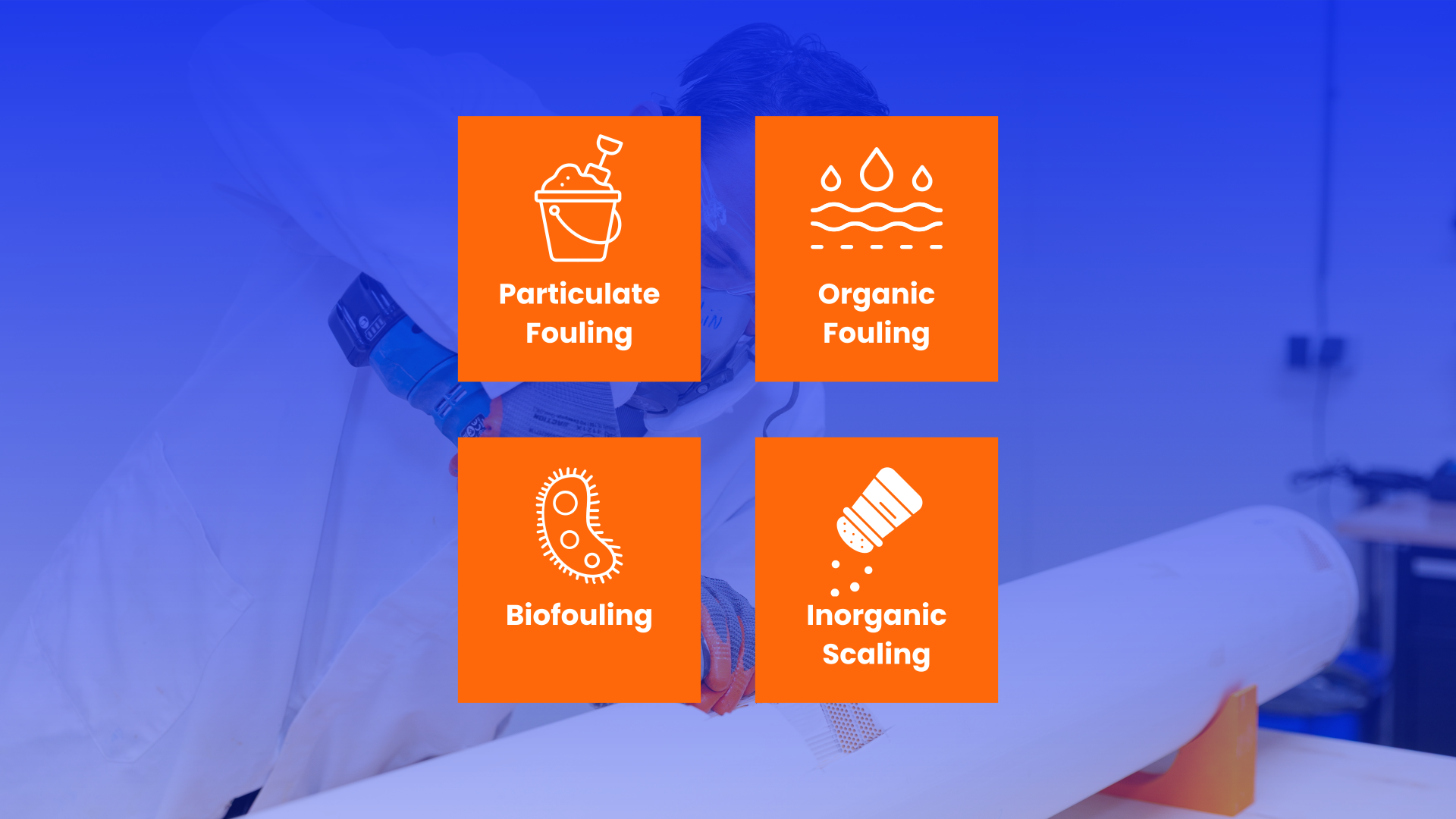
Particulate Fouling
Particulate fouling typically originates from silt, clay, corrosion products, sand or even debris from concrete storage tanks. When these solids pass through pretreatment or become entrained downstream, they accumulate on the membrane surface and increase hydraulic resistance. In many systems, particulate fouling points to a pretreatment issue. Filtration breakthrough, post-filtration flocculation caused by pH or charge shifts, corrosion products from upstream piping, or solids entrainment from storage basins can all expose the membrane to unexpected suspended solids loads. When the pressure drop rises rapidly and cleaning does not restore performance, the membrane may effectively be functioning as a solids filter rather than as a selective separation barrier.
Organic Fouling
Organic fouling develops when substances such as humic acids, surfactants, oils and greases adsorb onto the membrane surface and form a persistent layer. This type of fouling is frequently associated with changes in feed concentration, temperature fluctuations or pH variations that alter solubility and adsorption behaviour. It may also result from suboptimal cleaning chemistry or operational regimes that promote deposition rather than removal. Over time, organic layers can become increasingly compact, making standard cleaning less effective. When alkaline cleaning shows diminishing performance recovery, organic fouling is often a contributing factor.
Biofouling
Biofouling occurs when bacteria, algae or fungi colonise the membrane surface and produce extracellular polymeric substances (EPS), forming structured biofilms. This typically reflects a broader system imbalance rather than an isolated membrane issue. Insufficient pretreatment, biological activity in activated carbon, high COD combined with nutrient sources such as nitrogen and phosphorus, or hydraulic conditions that create low-shear zones can all promote biological growth. Biofouling in RO systems frequently coexists with inorganic deposition, as biofilms can trap scalants and particulates. Accurate identification is therefore essential to avoid treating symptoms while the biological driver remains active.
Inorganic Scaling
Inorganic membrane scaling occurs when sparingly soluble salts such as calcium carbonate (CaCO₃), calcium sulphate (CaSO₄), silica or barium sulphate (BaSO₄) exceed their solubility limits and precipitate on the membrane surface. Scaling is commonly linked to increased feed concentration while maintaining the same recovery, excessively high recovery rates, insufficient or incorrectly selected antiscalant dosing, or inappropriate CIP chemistry. Low crossflow conditions can further promote local oversaturation and deposition. Silica scaling in particular requires targeted control strategies and cannot be effectively managed with generic approaches. If scaling is misidentified, corrective measures may fail to restore stable operation.
Chemical Damage
Not all performance loss is caused by membrane fouling or membrane scaling. A sudden drop in salt rejection combined with increased flux may indicate chemical damage to the membrane surface due to exposure to oxidising agents such as sodium hypochlorite (NaOCl), chlorine, ozone or peroxides. Such damage can result from overdosing oxidants, insufficient scavenging, back-diffusion during downtime or unintended exposure due to process design. Unlike fouling mechanisms, chemical attack permanently alters membrane integrity and cannot be reversed through cleaning. Distinguishing between fouling and chemical degradation is therefore critical when evaluating corrective actions.
From Symptom to Root Cause
In practice, membrane fouling rarely involves a single mechanism — biofouling can entrap inorganic scalants, organic deposits can bind particulate matter, and scaling can accelerate biological growth. When the true root cause is not clearly identified, repeated cleaning increases operational costs and gradually reduces membrane lifetime. Identifying the dominant fouling mechanism is essential for restoring performance and improving the long-term reliability of your membrane system. EMI Twente’s membrane autopsy service provides rapid, evidence-based insight into these root causes, supporting informed decisions on cleaning, optimisation or replacement. Click here for more information.