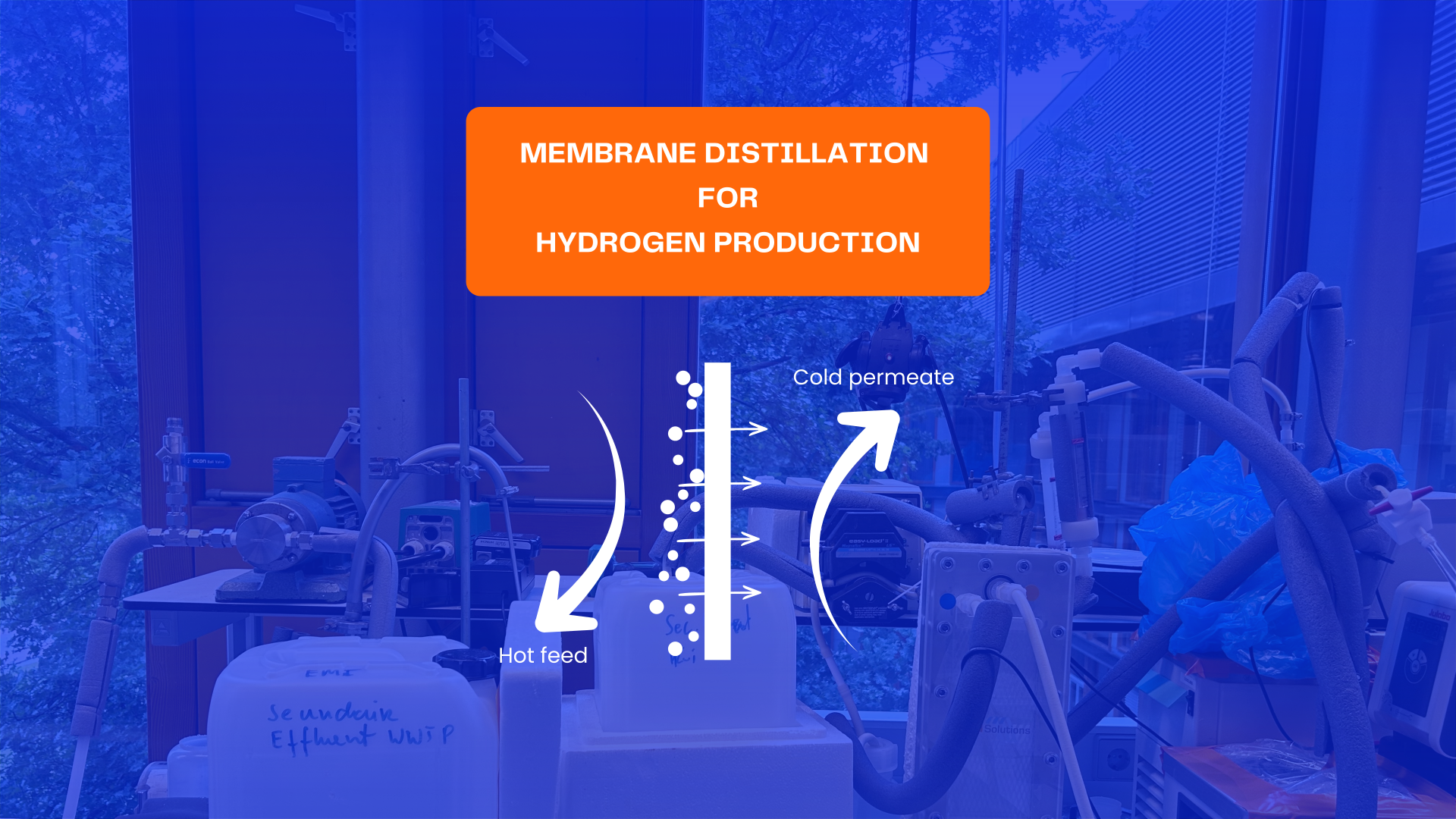
In power plants and industry, many processes are operated in which low-grade energy is released as heat. Heat is also generated in newer technologies, such as energy generation via hydrogen, a sustainable fuel with no greenhouse gas emissions. This creates an opportunity for circular water and energy use: using residual heat to produce high quality process water which can then be used for the production of hydrogen again.
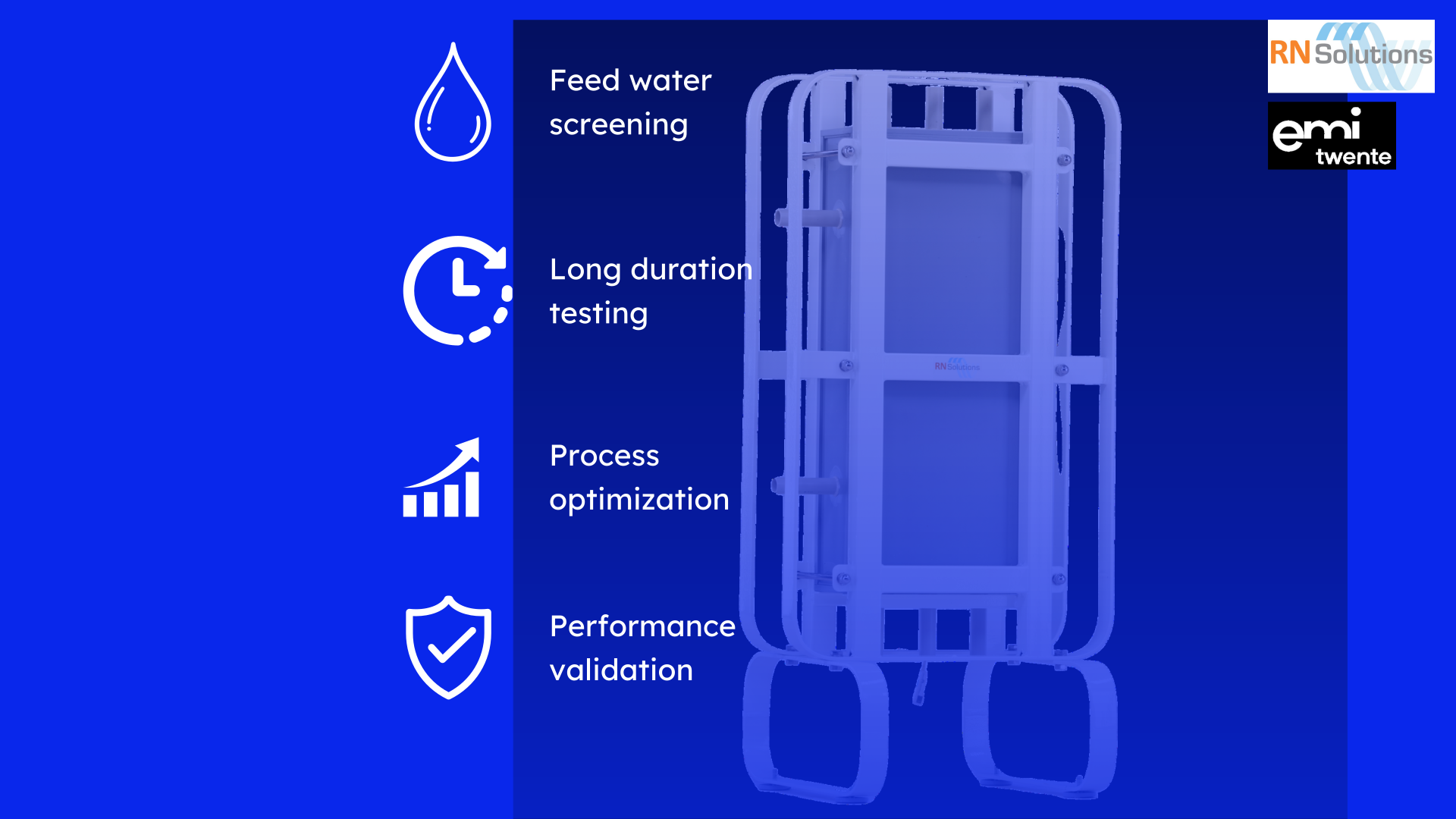
Within the KIEM GoChem project Membrane Distillation for and from H2, led by the University of Twente, this opportunity was explored in practice. The consortium consisted of Water Innovation Consulting, University of Twente, EMI Twente, Lenntech, Eregie and Floating Farm. EMI Twente supported the work by helping to build the membrane distillation test setup, purchased from RN Solutions B.V., in the University of Twente laboratories and by facilitating the supply of secondary wastewater for testing. The project has now been successfully completed.
The study investigated the potential of three different water sources as a feed stream for membrane distillation. The first was water with a salt concentration comparable to seawater. Even at moderate temperatures of 40 to 70 °C, the membrane distillation setup was able to produce ultra clean water with a salt concentration approximately 100,000 times lower than the feed. Importantly, the water production was hardly affected by the salt concentration of the incoming stream. This is relevant for industry because it opens the door to concentrating saline streams much further than many conventional processes allow. As salts crystallize out, the remaining water can be recovered and reused. In practice, this points towards zero liquid discharge concepts, where water is recycled and only a solid residue remains.
The second water source was effluent from a wastewater treatment plant. This stream was distilled without pretreatment and, after several days of operation, reached the same product water quality as the other sources. At the start of the test, part of the organic matter in the feed was carried over with the distillate. This showed that the process can work with challenging water sources, but also that pretreatment remains an important part of a reliable industrial process design.
The third source was treated rainwater from a Hemel(s)water installation. Rainwater is widely available, local and inexpensive, which makes it attractive where transport of water is costly or impractical. Using membrane distillation and residual heat, the research produced ultra clean water from this source as well. The achieved quality, below 10 µS/cm, was sufficient for direct use in hydrogen production.
For EMI Twente, this project shows how membrane technology can move from scientific testing towards practical industrial questions. Residual heat, alternative water sources and the growing demand for clean water in hydrogen production make membrane distillation an interesting technology to evaluate further.
RN Solutions, supplier of the membrane distillation modules used in this field, recently selected EMI Twente as its independent preferred laboratory partner for membrane distillation application testing. Read more about that collaboration here.